The casing pup joint's job
The shoe must land at the planned depth, the hanger must sit correctly in the wellhead, and the top of the string must meet the surface equipment. Casing pup joints close that gap: short casing lengths threaded and coupled like the string itself, inserted to make the arithmetic exact.
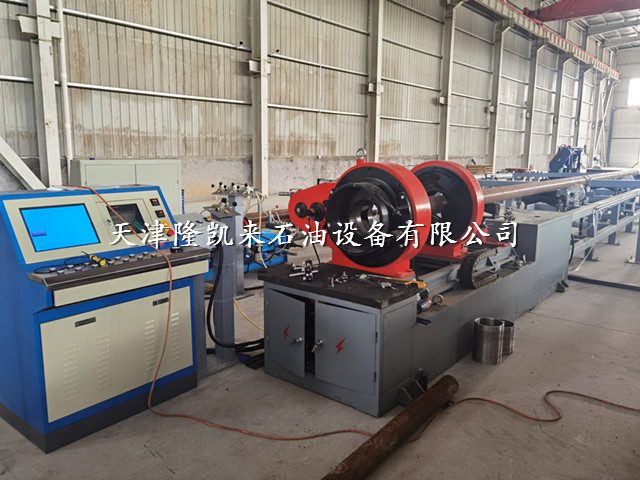
The company's casing literature states the capability plainly: casing and tubing pup joints of various sizes can be machined to order. In the catalogue, pup joints sit as their own family of twelve entries shared between casing and tubing titles, without model-by-model splitting. A casing pup joint is not a catalogue model; it is a specification: the outside diameter, weight, grade and thread the design names for the casing string it joins, cut to the lengths your landing calculation requires. Whether each joint is marked with its measured length is an enquiry item, confirmed in the quotation.
Specifying casing pup joints
| Field | State it as |
|---|---|
| Size and weight | Exactly as the casing line, e.g. 9-5/8 in, 43.5 lb/ft |
| Grade | J55, N80, L80, P110 — matching the string section |
| Thread | STC, LTC, BTC or premium pattern of the string |
| Lengths | Overall measured lengths, and whether coupling is included |
| Set logic | Single lengths or a graded set for fine adjustment |
The length convention deserves emphasis because it causes real errors: state whether each length is the pin-to-pin pipe length or the overall length including the coupling made up on one end. A casing pup joint order that does not declare its convention invites a string that lands a coupling-length short of target — a small error discovered at the worst possible moment. Ask for the convention to be restated in the quotation; check it before confirming.
Material, threading and marking
Pup joints are machined to order for the string's specification — the company's casing literature states that casing and tubing pup joints of various sizes can be machined to order. State the length marking each joint is to carry in the enquiry, and the quotation will confirm whether that marking, and the way it is applied, can be accepted and in what scope. For premium-thread casing sections, pup joints must carry the same premium pattern — see the premium connections page — and individual protection for them is an order point to state in the enquiry, for the quotation to confirm whether it can be accepted and in what scope. Protection is specified the same way for a two-metre joint as for a full joint.
Order them on the same RFQ as the casing, as their own lines; state the threading and packing the order needs in the enquiry, and ask for them to be confirmed for the order in the quotation.
What lengths are available?
Pup joints are made to order. Give target lengths in the RFQ and ask for the makeable set for that size and thread to be confirmed in the quotation.
Can pup joints match a premium-thread casing string?
Premium processing is a listed family, but a pup joint line is not accepted on the family name alone. Name the pattern exactly as on the string tally, and the quotation confirms whether that pattern can be machined on the pup joint workpiece and accepted as a separate line.
Should I order pup joints with the casing or separately?
They can be sent on the same enquiry as the casing, as their own lines, with the lengths your tally calls for. A separate order is raised as its own enquiry; either way, state the full casing specification on the enquiry.
Request a Quotation
Send your size, grade, thread and quantity. MOQ, packing and lead time are confirmed in the quotation for your exact specification — no generic promise replaces a written quote.