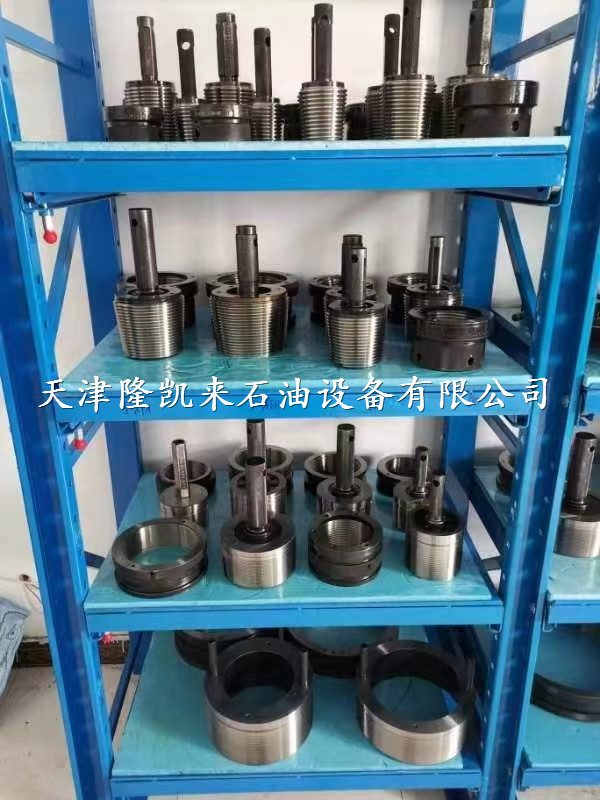
The four families in the workover grouping
This page's workover grouping covers four catalogue families: tubing (seven size-named entries), couplings (twenty-six entries, the largest family), pup joints (twelve entries) and crossovers (ten entries). Those counts are catalogue facts, nothing more — they say how the catalogue is organised, not how workover demand is distributed. This page organises those families as one workover system: the families themselves, and the inspection and stocking points an enquiry can name for them.
Where a programme breaks out and re-makes the joints it lifts at a pull, the inspection points for the connections — thread condition, finish condition and make-up history — can be named in the enquiry, so the quotation confirms the inspection basis for the order. Where the programme retires a coupling on inspection, the enquiry states the size and grade of the replacement line. The published coupling stock list (1.315 in to 4-1/2 in) is the stock list for the coupling family: the sizes a coupling line is checked against when a workover enquiry is written.
The workover kit, family by family
| Family | Workover role | Buying pattern |
|---|---|---|
| Tubing | The tubing family in this page's workover grouping | State size, grade and finish of the existing string on the enquiry line |
| Couplings | The coupling family in this page's workover grouping | Stock by size/grade/form; EUE stock entries named |
| Pup joints | The space-out lengths in this page's workover grouping | State the length set and the measured-length convention your tally uses |
| Crossovers | The crossover family in this page's workover grouping | Specified per conversion; premium patterns via processing |
| Special clearance couplings | The special-clearance family, listed on its own page | State the drift or restriction measurement your design names |
First, identity: name the existing string's specification for every replacement item in the enquiry — size, weight, grade, thread form — and ask for the match to be confirmed item by item in the quotation. Second, timing: send the string specification with the programme dates, and ask for the coupling stock position and the pup joint sets for the programme to be confirmed line by line in the quotation, with MOQ, packing and lead time in writing.
Which items should we always hold in stock?
That is the programme's own stocking decision, stated by the programme: the couplings in the string's sizes, grades and forms, and a pup joint length set for re-spacing, are the lines an enquiry can name for it. Tubing replacement joints are bought against the programme: whether they are held as stock or ordered per programme is a decision the programme states, not a default this page assumes.
Can replacements match an old string from another maker?
Not on nominal data alone. Name the full specification in the enquiry — size, weight, grade, thread form and tolerances, and for special-thread components the connection at both ends — and ask for the match for the line to be confirmed in the quotation. Send the original string specification, not the previous supplier's part number.
What about tubing that comes out corroded?
Localised damage and general CO2 corrosion are different enquiry cases — see the CRA page: the replacement line states the grade for the corroding service, not just the size and thread.
Request a Quotation
Send your size, grade, thread and quantity. MOQ, packing and lead time are confirmed in the quotation for your exact specification — no generic promise replaces a written quote.